


The pesticide industry is a fundamental industry that ensures national food security. Every year, about 25% of crops worldwide are affected by pests, diseases, and weeds. The rational use of pesticides can help recover 30% to 40% of yield losses. In the research and application of pesticide formulations, defoamers and spreaders are key functional components of the additive system, directly affecting the efficiency of formulation processing and the effectiveness of field applications
▶ Pain points in the pesticide industry
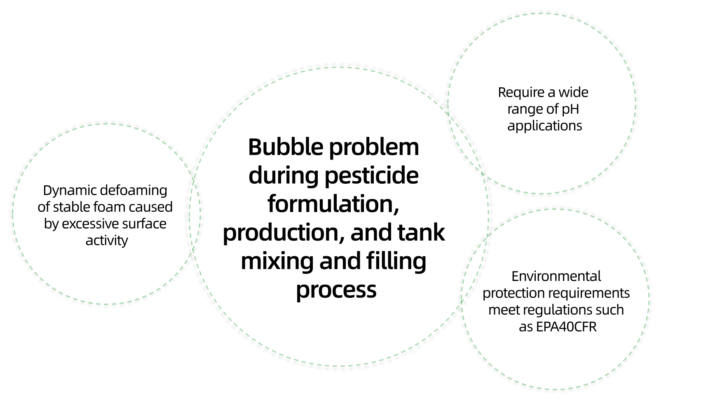
In the process of pesticide production, tank mixing and filling, high-speed shearing, mixing, pumping and other processes are prone to produce a large amount of foam, which reduces production efficiency and affects the quality stability of the preparation. However, people rely on repeated addition of high doses of defoamer to solve the problem, resulting in significant cost problems and inefficiencies. The original intention of designing Tiger high-performance defoamers is based on the following industry needs :
● Stability and dynamic defoaming caused by excessive surface activity Stability and dynamic defoaming caused by excessive surface activity
● Wide PH applicable range
● Environmental protection requirements
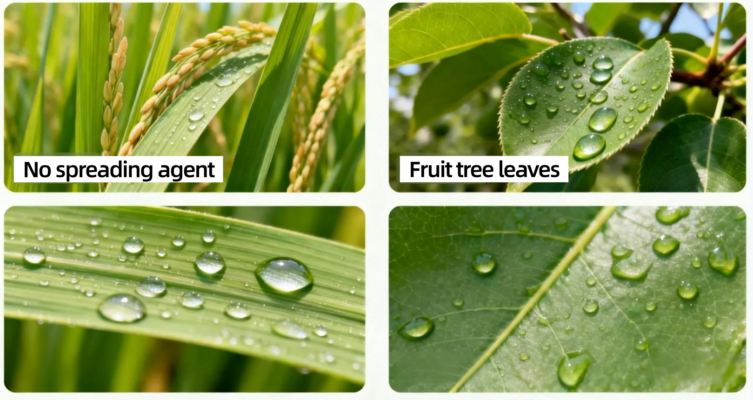
In terms of application, the wetting and spreading ability of pesticides on crop surfaces directly affects the control effect. There are significant differences in leaf surface structure, wax layer thickness, and surface free energy among different crops, and most wetting agents are difficult to meet diverse needs. For example, the surface of rice leaves has obvious hydrophobicity, while fruit tree leaves often have a thick wax layer that requires a specific wetting scheme.
▶ Solution (Recommended)
1. Dynamic defoaming
Dynamic defoaming during grinding and long-lasting foam suppression time are the core requirements for defoaming pesticide formulations. We compare different types and structures of defoamers, simulate high-speed dispersion and bubble tests to compare their defoaming degree :
● High speed dispersion testing
Simulate the production mixing process through high-speed dispersion testing. Take 100g of pesticide formulation (including surfactants) and add equal proportions of defoamers. Use a high-speed disperser to disperse at high speed for 30 minutes and observe the degree of foaming
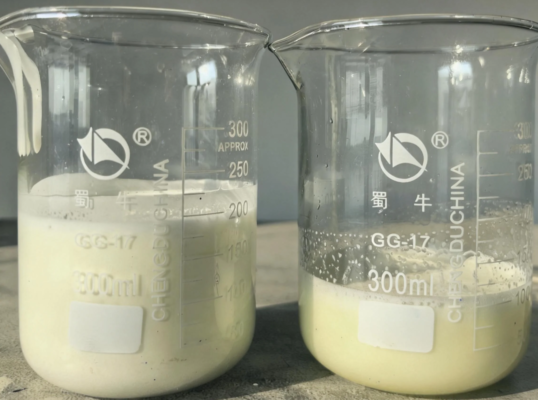
【1】Conventional non silicon defoamer 【2】TAIGA foam breaking silicone A
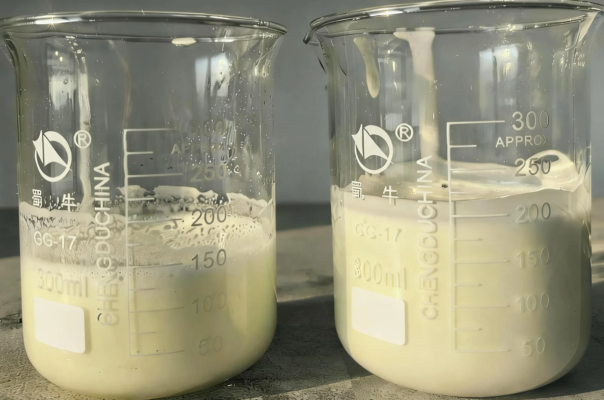
【1】 TAIGA foam breaking silicone B 【2】Organic silicon defoamer on the market
● 3-hour bubble test
Continuous 3-hour bubble test, simulating instantaneous bubble breaking performance during mixing, stirring, and high-speed grinding :
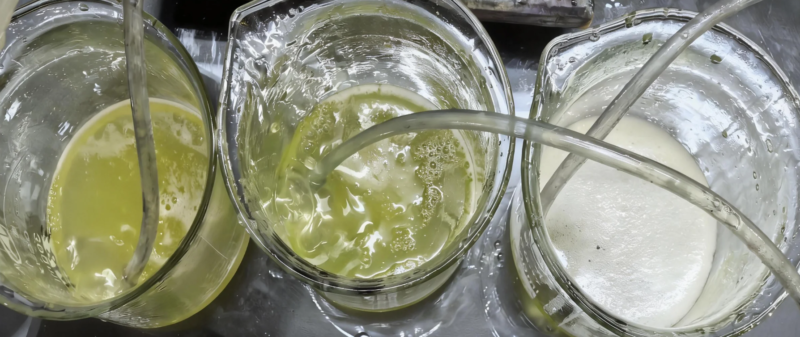
【1】 TAIGA foam breaking silicone A
【2】 TAIGA foam breaking silicone B
【3】 Organic silicon on the market
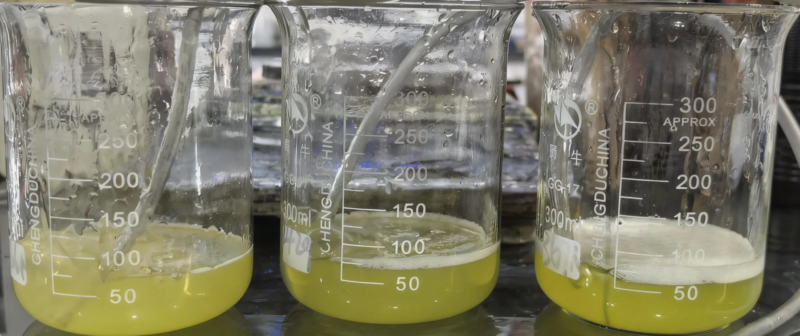
【1】 TAIGA foam breaking silicone A
【2】 TAIGA foam breaking silicone B
【3】 Organic silicon on the market
In two testing processes, the test results showed that the defoaming/defoaming effect of Taige’s silicone defoamer containing foam breaking particles was significantly better than that of conventional non silicone and market silicone defoamers.
Through special modification, Tiggo additives incorporate foam breaking particles into organic silicon polymers, significantly improving instantaneous foam breaking performance and 100% activity, providing customers with high-performance and environmentally friendly comprehensive experiences for special dynamic defoaming requirements.
2. Super Exhibition
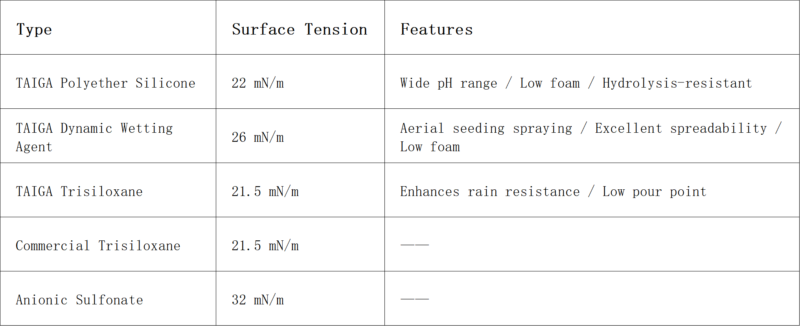
Both aerial seeding and crop spreading require pesticide preparation to have excellent wetting ability. The ideal spreading agent can not only spread on the waxy surface such as leaf surface, but also has the characteristics of low foam, spraying efficiency enhancement and long effect duration.
● Permeation of porous materials
Using porous materials of the same area, observe the permeability performance of different products when testing complete infiltration wetting
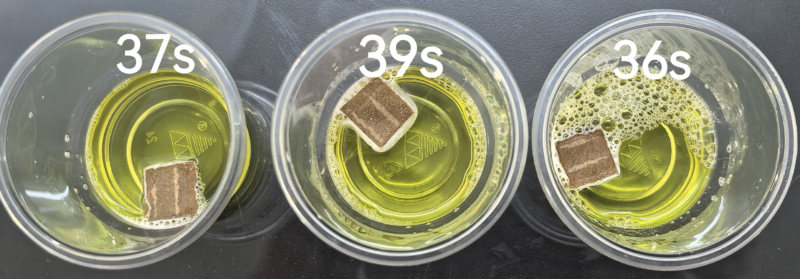
【1】 TAIGA Polyether Organosilicon
【2】 TAIGA Dynamic Wetting Agent
【3】 TAIGA trisiloxane
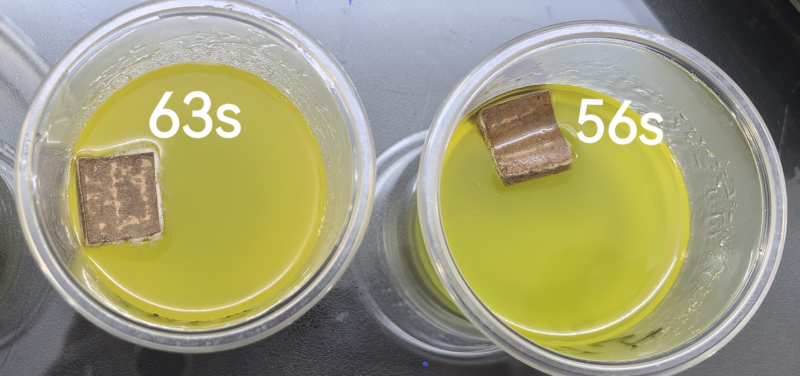
【1】 Tri siloxane sold on the market
【2】 Ionic wetting agent
● Wax leaf surface adhesion
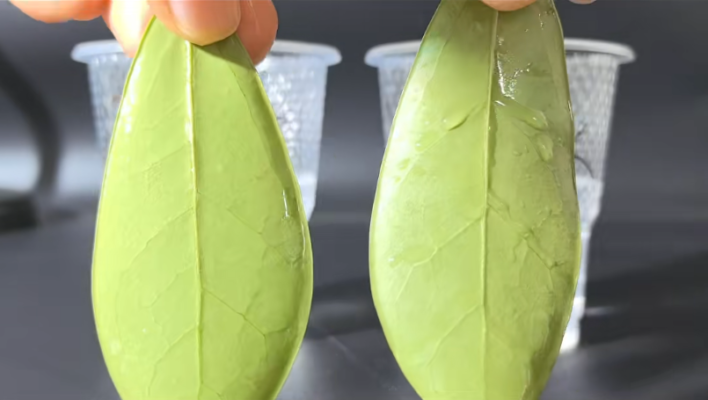
【1】 TAIGA is showcasing its effectiveness
【2】 Blank
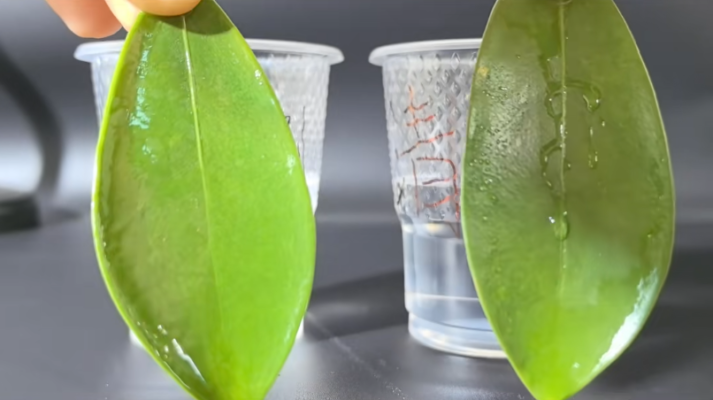
【1】 TAIGA is showcasing its effectiveness
【2】 Blank
TAIGA High Performance Spreader exhibits excellent spreading, penetration, and adhesion properties when applied, as well as low stomatal permeability, which can enhance the deposition and adhesion of spray droplets on leaf surfaces, thereby reducing spray volume and improving pesticide efficacy.
Solution | Solvent-free epoxy color sand additive kit
Solution | Epoxy floor coating additives
What to do if quick-drying diluents cause dullness and orange peel effect?
Configuration and Performance Mechanism of Water based Organosilicon Additives
Product recommendation | Improvement of wear resistance of SPC flooring