


Preface:
Against the backdrop of efficient global supply chains, the container manufacturing and maintenance industry faces persistent cost and schedule pressures. As a critical phase in container production, the drying speed of the painting process directly determines production line cycle times, facility turnover rates, and overall operational costs
① Technical difficulties in fast drying pulp
The use of fast drying diluents (such as formaldehyde BMM) has become a common process for improving coating cycle time and compressing construction period on coating assembly lines that pursue efficient production.
Coating production enterprises need to balance the safety of coating storage and application, usually adding 8-25% slow drying solvents (taking solvent based high solid container paint as an example) during the coating production process to ensure safety. However, during construction, a large amount of fast drying diluents with different polarities cause the volatilization gradient of the coating to become chaotic, resulting in a significant decrease in gloss, poor leveling, and frequent issues such as orange peel. The main impacts are as follows :
▶ Resistant to diluent impact
In order to ensure the storage safety, stability, and coating speed of the original slurry, slow drying solvents are often used for the original slurry, while fast drying solvents are used for the diluent. The dilution ratio is large (such as ≥ 30%), and the mixing process is simple. This requires the original slurry to have excellent resistance to diluent impact, to prevent solid powder from flocculation and coarsening (such as fineness ≥ 20um) during the dilution process, which affects the glossiness and color of the coating.
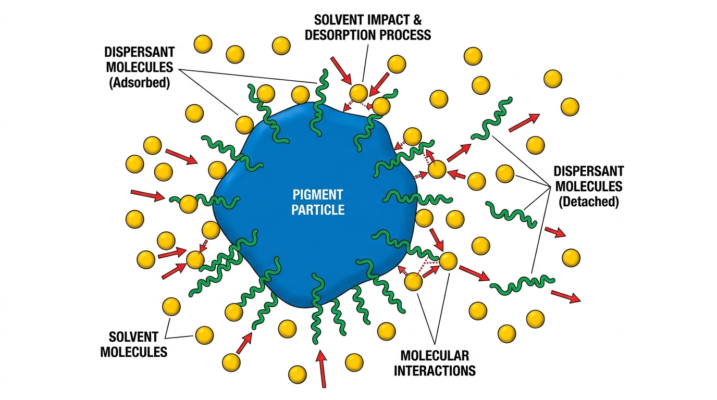
Figure 1 Dispersant desorption from pigment surface caused by solvent impact
▶ Particle stability during phase change
When the solvent evaporates rapidly, the viscosity of the system increases sharply, and the pigment and filler particles directly approach rapidly. If the anchoring strength of the dispersant is insufficient or the spatial hindrance is insufficient (the protective layer of the auxiliary agent needs to be greater than 10nm), it is impossible to maintain the separation state of the pigment particles in a rapidly changing environment. These tiny pigment aggregates will make the surface of the paint film micro rough, affecting the glossiness and smoothness of the coating
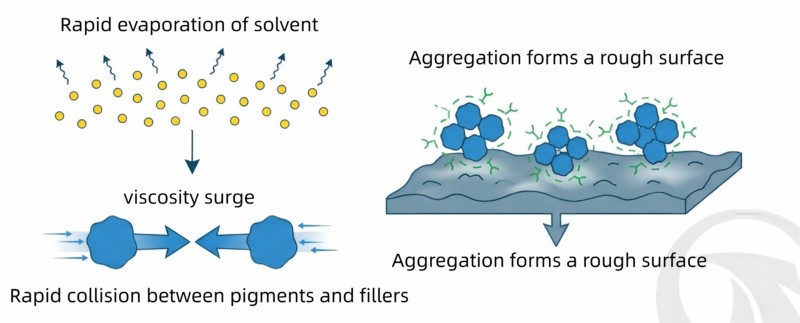
Figure 2: Pigment coarsening caused by rapid phase change of paint
▶ Short opening time for leveling
The use of fast drying diluents can shorten the surface drying time by more than 2-3 times, and the short leveling opening time requires the slurry to have fast leveling properties. Microscopic manifestations include rapid drying and curing, leading to a sharp increase in the viscosity of the coating in a short period of time, rapid loss of flow of the coating, closure of the leveling window, and locking of the leveling agent inside the coating, resulting in the formation of orange peel patterns on the surface of the cured paint film and a significant decrease in the glossiness of the dry film
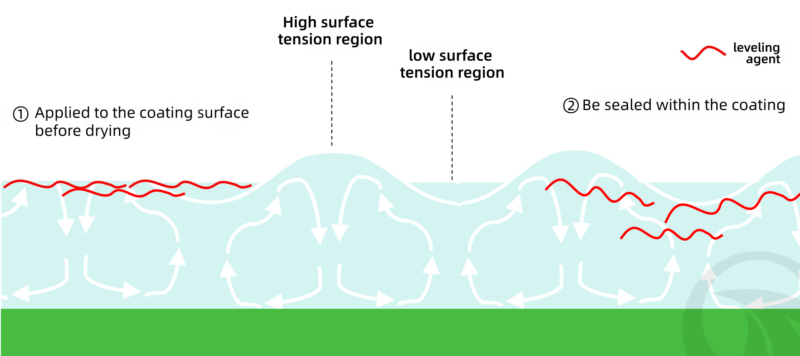
Figure 3: Reasons for the rapid drying of paint orange peel caused by rapid gauge drying
② Container quick drying coating test
Fast drying means that coatings need to have fast leveling performance. Traditional fast leveling methods often add substances such as organosilicon and fluorine, using low surface tension (organosilicon additives have a surface tension of about 21-25mN/m, fluorine-containing additives have a surface tension of about 17-19mN/m) and fast migration to solve the problem. The disadvantages are that the safety of use cannot be guaranteed, compatibility issues are difficult, and the environmental friendliness of coatings cannot be taken into account.
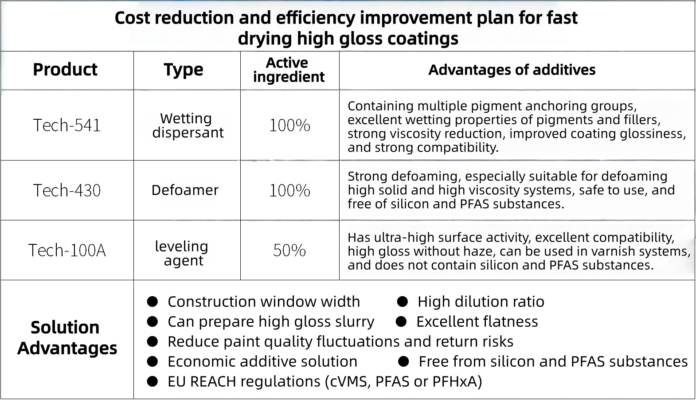
This time, Taige additive brings a leveling solution for fast drying high gloss coatings. This solution can effectively solve the problem of extinction and orange peel caused by fast drying diluents, and improve the application window of the coating diluent ratio. The solution does not contain any silicone or fluorinated PFAS substances, meeting relevant environmental standards of various countries (such as the EU REACH regulation), and is safe and efficient
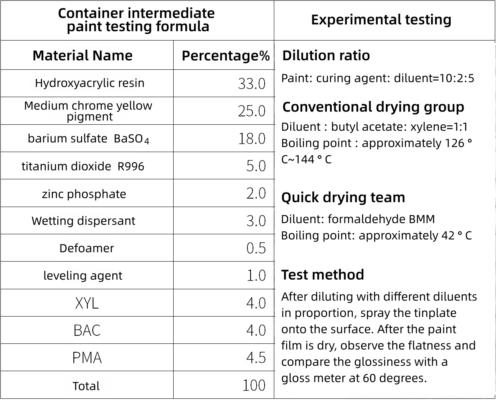
The experimental test is based on the intermediate paint of the container, and under a standard environment of 25 ℃, the parallel comparison of the effects of different drying speed diluents on the paint film after high dilution ratio is conducted to test the anti dilution stability and the improvement effect of the construction window of the additive
▶ Diluent system
① Conventional drying group: mixed diluent “50% butyl ester+50% xylene”, surface drying time is about 30-60 minutes;
② Quick drying group: formaldehyde, with a surface drying time of about 10 to 20 minutes
(For every 10 ℃ increase in temperature, solvent evaporation and reaction rate roughly double)
▶ Dilution ratio
Paint: curing agent: diluent=10:2:5
▶ Container testing formula
Commercial control group 1 :
▷ There is a large difference in the flatness of the flow, and the orange peel in the fast drying group is obvious
▷ Poor glossiness, with a glossiness difference of approximately 19 °
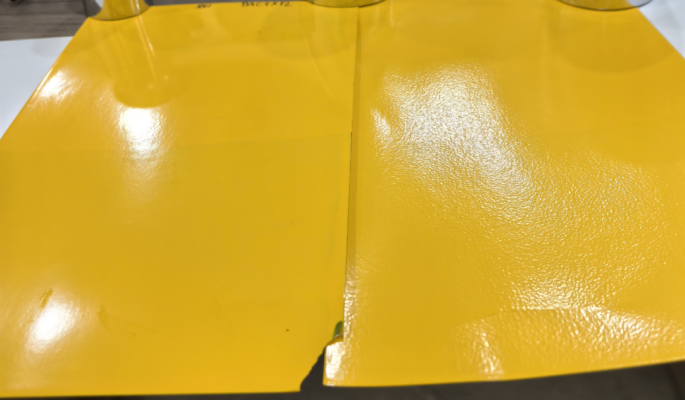
【1】Gloss of regular drying group: 77° 【2】 Gloss of quick-drying group: 58°
Commercial control group 2 :
▷ There is a significant difference in the flatness of the flow
▷ High gloss, but glossiness difference ≈ 10 °
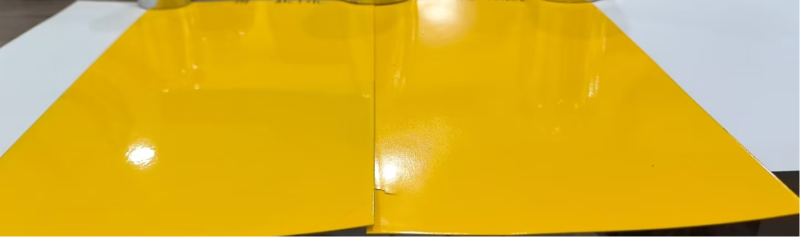
【1】Regular drying group gloss: 93° 【2】Quick-drying group gloss: 83°
TAIGA Additive Solution :
▷ The flatness of the flow is basically consistent
▷ High gloss, with a glossiness difference of ≤ 1 °
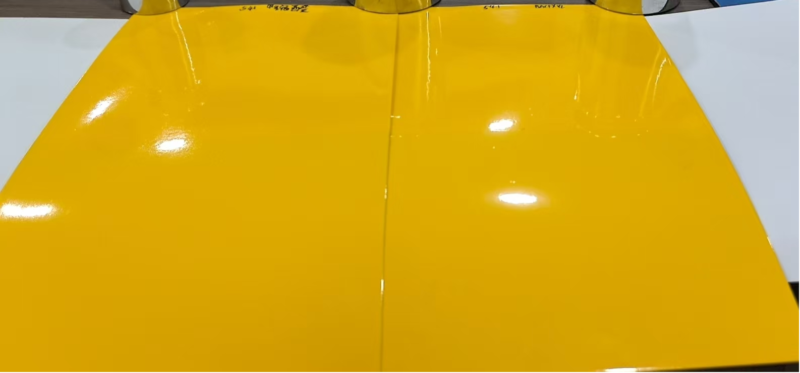
【1】Regular drying group gloss: 90° 【2】Quick-drying group gloss: 89°
The experimental results show that the dry film glossiness difference of the TAG additive scheme is less than 1 degree, and the flow flatness is basically the same. This additive solution (Tech-541 dispersant, Tech-430 defoamer, Tech-100A leveling agent) improves the application window of the coating formula, allowing for the free selection or adjustment of diluents according to the ambient temperature during coating application, effectively reducing fluctuations or decreases in the core quality of the paint film (especially gloss and leveling).
Regardless of the type of thinner used in summer or winter, the appearance quality of the paint film can be maintained at a stable and high level, reducing the quality fluctuations and return risks of the coating, and meeting environmental regulations in multiple countries
Solution | Solvent-free epoxy color sand additive kit
Solution | Epoxy floor coating additives
What to do if quick-drying diluents cause dullness and orange peel effect?
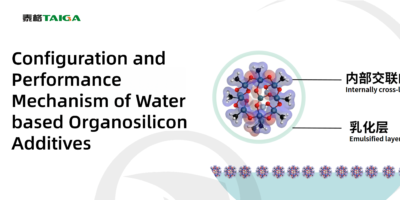
Configuration and Performance Mechanism of Water based Organosilicon Additives
Product recommendation | Improvement of wear resistance of SPC flooring