


After years of development, epoxy floor coatings have achieved a high degree of consistency in formulation materials, with matrix resins such as 128 and curing agent systems such as 113/601. What truly distinguishes products is no longer “what epoxy resin to use”, but “whether the system can stably exhibit the designed performance”, achieving effectiveness and reliability – such as the color paste not floating when added, the self-leveling coating not showing pinholes or trowel marks when scraped, the primer not delaminating entirely due to moisture from the base layer when it penetrates into the cement-based material, and the material not becoming coarse or settling over long-term storage. TAIGA provides a supporting solution for epoxy floor coatings using self-developed additives for the base, mid, and top coat systems
01 Analysis of application difficulties of epoxy floor coating
① Floating color, blurring, color difference drift
Floating color and color bleeding are the most common and complex issues in floor color mixing projects, which are difficult to solve using “mixing formula ratios”. The main reasons are as follows :
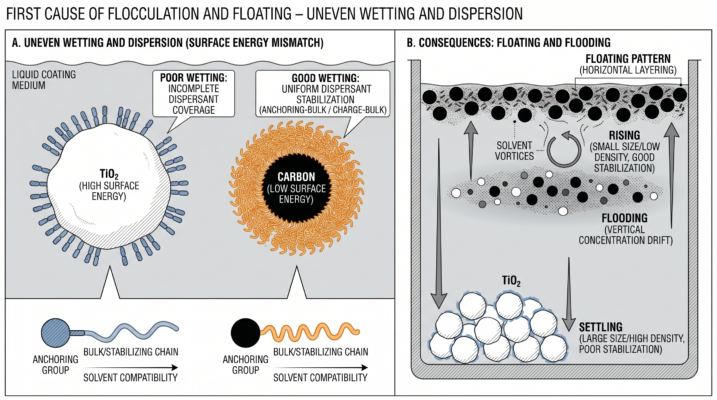
▶ Surface anchoring of pigments and fillers + gravitational effect
The surface energies of different pigments (titanium dioxide and carbon black) vary significantly. The apparent issue seems to be “improper grinding”, but the underlying problem actually stems from the matching relationship between the anchor groups of the dispersant and the surface of the pigment. The wetting dispersant needs to establish an equivalent “anchoring-steric hindrance” or “charge-steric hindrance” stable layer. Large particles/high-density particles settle faster, while small particles/low-density particles float up with the solvent vortex, forming pigment stratification (floating color) in the horizontal direction or concentration drift (floating color) in the vertical direction at the microscopic level. This can be controlled by adjusting the wetting dispersant
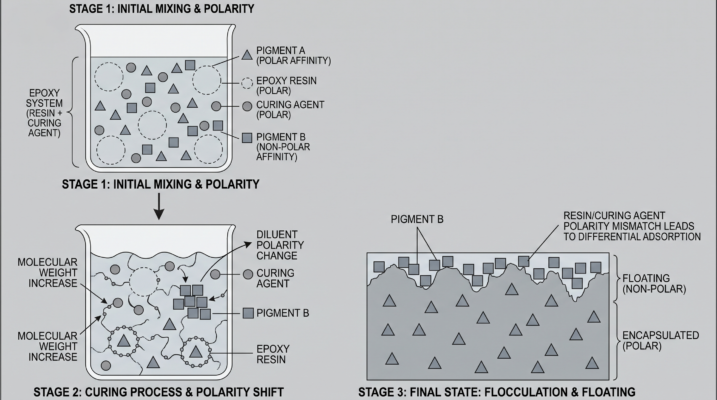
▶ Polarity mismatch between resin and curing agent
During the curing process of the epoxy system, changes in the molecular weight distribution of the resin and the polarity of the diluent in the curing agent alter the “affinity” towards different pigments – some pigments are preferentially adsorbed and wrapped, while others are repelled and pushed to the surface, resulting in the classic phenomenon known as “floating color when changing curing agent”. This can be controlled by adjusting the wetting and dispersing agent
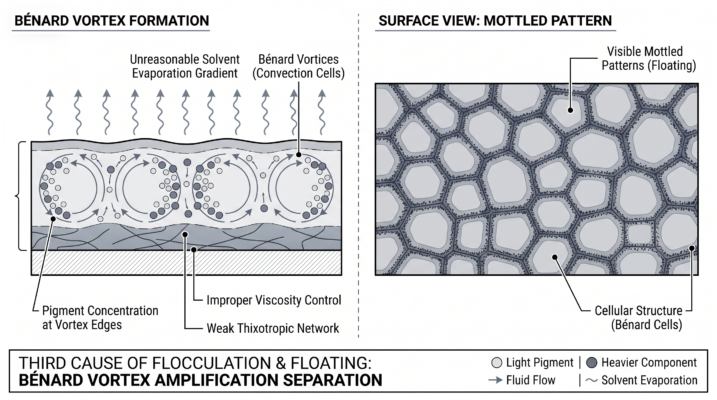
▶ Amplification and separation of Benard vortices
When the system viscosity is not properly controlled, the solvent evaporation gradient is unreasonable, or the thixotropic network is too weak, Benard vortices will form inside the wet film, and lightweight pigments are more likely to be washed to the vortex edges, resulting in visible mottling. This can be controlled by adding surface additives
② Self-leveling and thin-coated surfaces
Self-leveling and thin-coating finishes have high requirements for appearance. The difficulty lies in the high viscosity of the epoxy system, which can cause mixing/scraping/porous concrete substrates to enter the coating. The bubble defoaming period is long, and if strong defoamers are used, shrinkage cavities and fish eyes may form. In practical experiments, it is necessary to select defoamers according to the “bursting-suppressing-defoaming” process, and match them with the migration behavior and surface tension curve of the leveling agent
③ Coarsening, sedimentation, stratification
High stability is a rigid standard for high-quality epoxy floor coatings. Under the current frequent occurrence of the El Niño phenomenon, the thermal motion of particles accelerates coarsening and sedimentation under high summer temperatures, exacerbating the instability of slurry storage. The reasons for this are usually the following three points:
▶ Insufficient thickness/fastness of the adsorbed layer of dispersant → flocculation and coarsening
▶ Absence or premature establishment of thixotropic network → either settle to a hard bottom or increase overall consistency
▶ The surface energy of the filler/ground calcium carbonate is not matched → the density difference drives delamination
④ Moisture content, efflorescence, delamination
The issues of floating color and pinholes in the topcoat may be caused by the primer not sealing the substrate. When the moisture content of the concrete is greater than 8% (plastic film sealing method ASTM D4263 / GB), or there is moisture from groundwater, the water vapor can lift the primer, forming microbubbles/microdelamination. Alkaline substances migrate to the interface with the water vapor, damaging the adhesive anchoring. Insufficient penetration of the primer only “floats” on the surface dust layer, and later slips off under stress
02 Epoxy flooring auxiliary agent
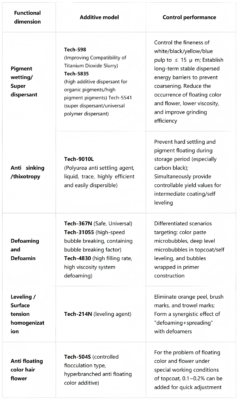
As an additive manufacturer, Taiga boasts proprietary intellectual property rights for all its products. Through years of research and application matching, it provides the market with supporting solutions for epoxy floor coatings. Besides their primary uses, other auxiliary properties of each type of additive are the key to differentiating performance. When matching additives, the following five functions are primarily provided:
① Pigment wetting agent / hyperdispersant
Tech-598 (Improving the Acceptability of Titanium Dioxide Slurry)
Tech-5835 (Super Dispersant for Organic Pigments/High Oil Absorption Pigments)
Tech-5541 (high molecular weight dispersant, anti floating, anti fading, anti sinking)
Improve grinding efficiency by reducing the fineness of white/black/yellow/blue pulp to ≤ 15 μ m; Establish long-term stable dispersed energy barriers to prevent coarsening. Reduce the occurrence of floating color and flower, lower viscosity, and improve grinding efficiency
② Anti-settling / Thixotropic
Tech-9010L (polyurea anti-settling agent, trace amount, high efficiency)
Prevent sedimentation and pigment floating (especially carbon black) during storage; meanwhile, provide a controllable yield value for the midcoat/self-leveling
③ Defoaming and degassing
Tech-367N (Safe, Universal)
Tech-31055 (high-speed bubble breaking, containing bubble breaking factor)
Tech-4830 (high filling rate, high viscosity system defoaming, safe to use)
Differentiated scenarios for color paste microbubbles, topcoat/self leveling deep level microbubbles, and primer coating with bubbles
④ Leveling/surface tension homogenization
Tech-214N (leveling agent)
Eliminate orange peel, brush marks, and trowel marks; Form a synergistic effect of “defoaming+spreading” with defoamers
⑤ Prevent floating color and unevenness
Tech-504S (controlled flocculation type, hyperbranched anti floating color additive)
For the problem of floating color and flower under special working conditions of topcoat, 0.1~0.2% can be added for quick adjustment
03 Epoxy Floor Formula
① Epoxy floor color paste
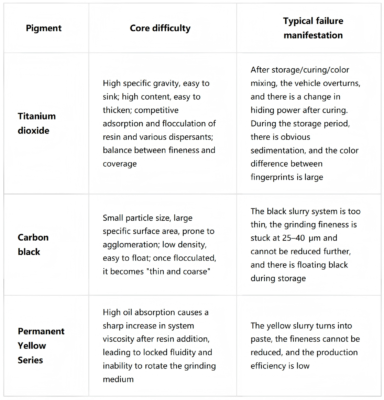
Customized composite dispersants and auxiliary systems are developed based on the chemical properties and surface charges of different pigments such as titanium dioxide, permanent yellow, carbon black, and phthalocyanine blue. While ensuring high solid content and color saturation, the synergistic effect of gas-phase silica, anti settling agents, and defoamers achieves good storage stability and construction leveling, solving common problems of floating color, discoloration, and settling
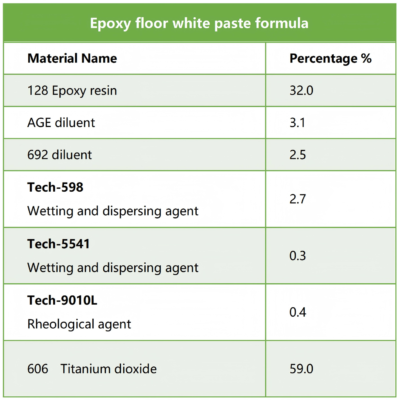
▶ Epoxy floor white paste: high solid content+synergistic effect of two dispersants
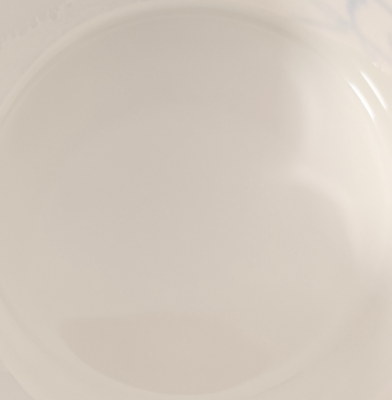
Epoxy floor white paste status
The prepared color paste has a pure white color, delicate without particles, and excellent coverage. Tech-598 is responsible for quickly wetting and reducing the viscosity of titanium dioxide TiO ₂ surface, improving fluidity and filling rate; Tech-5541 is responsible for establishing stronger spatial hindrance on the surface of titanium dioxide TiO ₂, suppressing the settling of titanium dioxide, preventing micro floating color and flower formation, and improving the acceptance of white paste; Tech-9010L anti settling agent provides mild thixotropy, small thickening amplitude, does not affect flowability, and prevents hard bottom settling of high filling titanium dioxide slurry after long-term standing
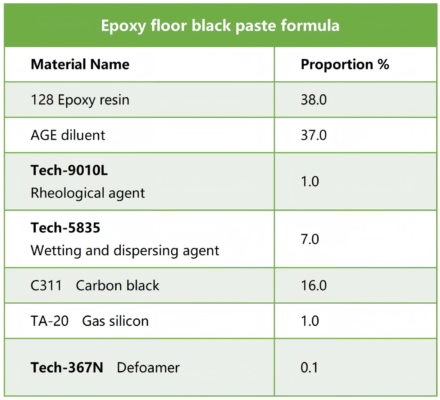
▶ Epoxy floor black paste: alkaline multi-point adsorption dispersant
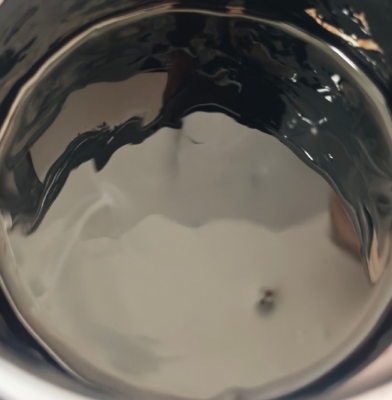
Epoxy floor black paste state
The prepared black paste has a full and pure blackness, and the system is evenly dispersed. This is due to Tech-5835 (solid content 40%) as an alkaline multi-point adsorption dispersant, which is rich in various affinity pigment groups such as large π bonds and hydrogen bonds, exhibiting high wettability and high fluidity towards black paste; Tech-9010L rheology agent can improve the mixing ability of black paste during paint making and color matching, enhance mixing efficiency and production efficiency; Bubbles are easily adsorbed on the porous surface of carbon black, especially on finer black slurries. Tech-367N defoamer is safe to use and has high defoaming efficiency.
▶ Epoxy floor yellow paste: alkaline multi-point adsorption dispersant
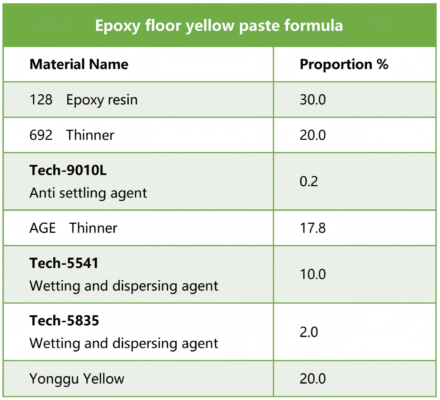
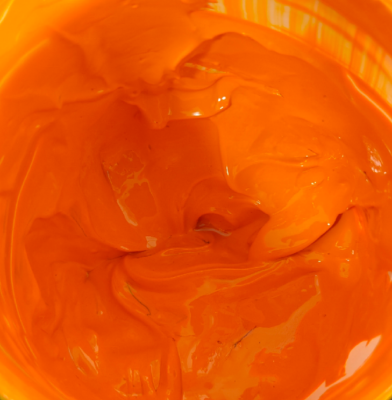
Epoxy floor yellow paste state
The prepared yellow paste has bright and saturated colors, strong storage stability, and no floating colors or flowers. The universal anchoring group of Tech-5541 covers the inorganic/organic mixed boundary zone, reducing viscosity and preventing floating color; Tech-5835 is responsible for enhancing the wetting and coating of organic yellow pigment particles to improve stability; Tech-9010L also improves the mixing ability of yellow paste during paint making and color matching
▶ Epoxy floor blue paste: alkaline multi-point adsorption dispersant
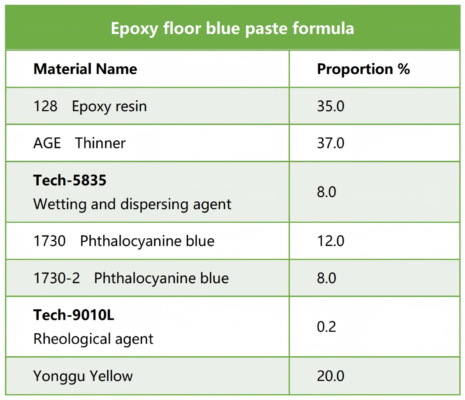
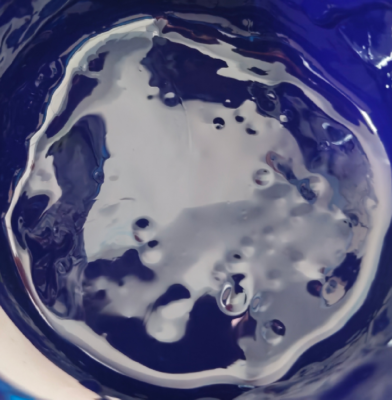
Epoxy floor blue paste status
The prepared blue paste has bright and saturated colors, strong storage stability, and no floating colors or flowers. Tech-5835, as an alkaline multi-point adsorption dispersant, is rich in various affinity pigment groups such as large π bonds and hydrogen bonds. When dispersing phthalocyanine blue, it exhibits high wettability and high fluidity; Tech-9010L improves the mixing ability of blue paste during paint making and color matching
② Epoxy sealing primer with matching additives
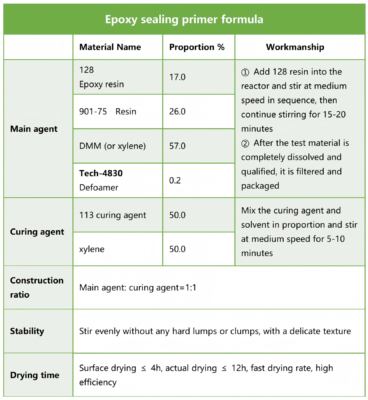
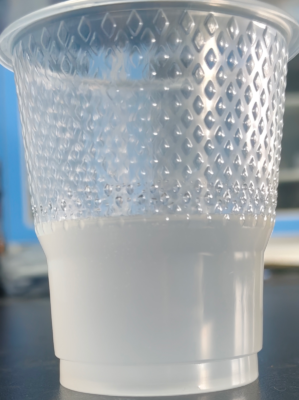
Epoxy sealing primer wet material
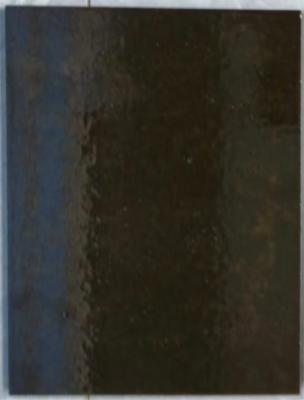
Epoxy sealing primer dry film
After epoxy sealing bottom coating, it effectively strengthens the loose base structure and improves the overall impermeability and durability of the flooring system. 0.2% Tech-4830 defoamer can effectively suppress the bubbles trapped in the primer during construction, help remove microbubbles, improve the flowability of the coating, and reduce the occurrence of anti microbubble blockage. It is particularly suitable for epoxy sealing primer, safe to use, and improves the moisture sealing and coating density of the base layer
③ Auxiliary agents for epoxy intermediate layer paint
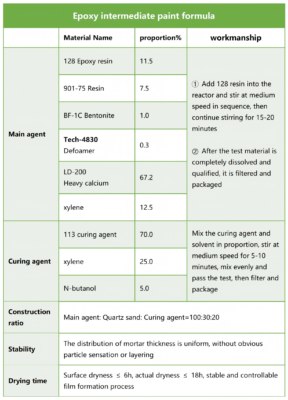
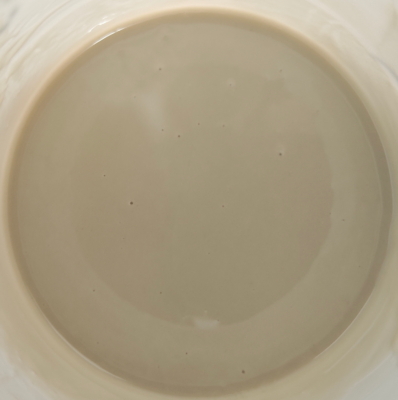
Wet material for epoxy intermediate paint
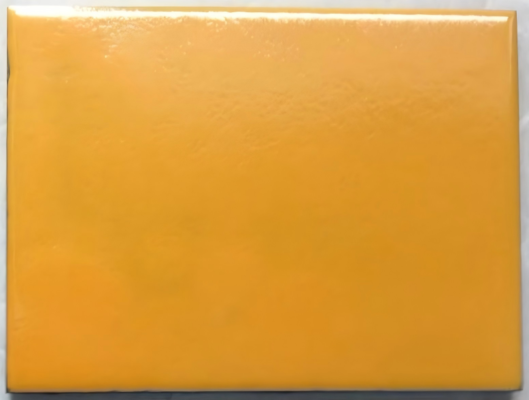
Epoxy intermediate paint dry film
As a key layer connecting the primer and topcoat, the intermediate coat has a thicker thickness and requires impact and compression resistance. After adding bentonite, the viscosity of the formula increases, and the difficulty of defoaming suddenly increases. The use of 0.3% Tech-4830 defoamer effectively solves the problem of easy foaming during high viscosity thick coating, with safe use and zero risk of silicon precipitation. After coating and curing, the surface of the intermediate paint film is filled flat without obvious particle sensation or pores, which can effectively improve the overall structural strength and flatness of the ground, ensuring the adhesion and apparent effect of the topcoat.
④ Formula matching additives for epoxy self flowing flat paint
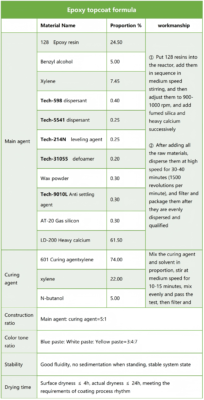
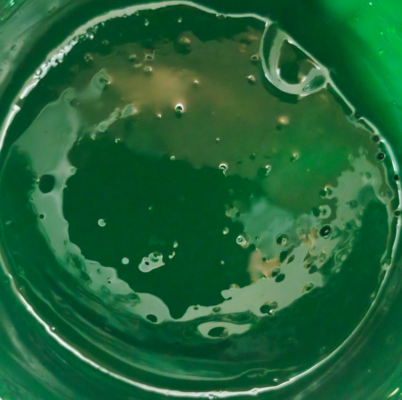
Epoxy topcoat wet material
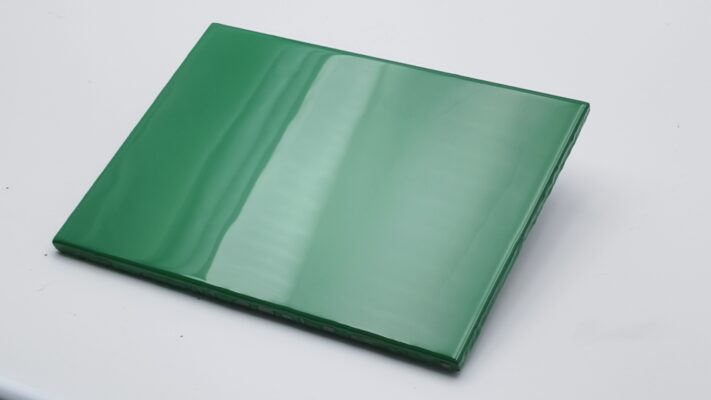
Epoxy topcoat dry film
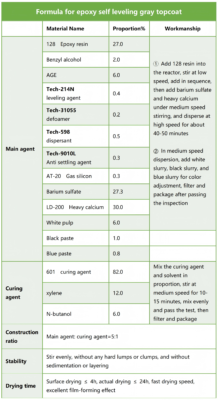
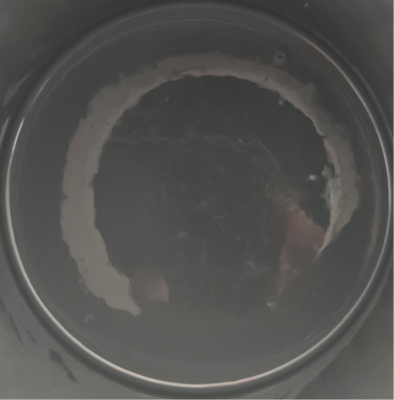
Epoxy self leveling gray topcoat wet material
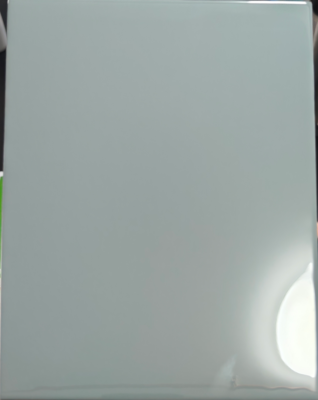
Epoxy self leveling gray topcoat dry film
After self leveling and film formation, the topcoat has bright and full colors, excellent glossiness, a smooth and flawless surface, and meets the preset high-end decoration and protection standards. Taking the green surface as an example, Tech-598 with 0.40% is responsible for quickly wetting and reducing the surface viscosity of heavy calcium CaCO3, improving its fluidity and filling rate; 0.25% Tech-5541 is responsible for establishing stronger steric hindrance on the surface of heavy calcium CaCO3, inhibiting the settling of heavy calcium, preventing micro floating color and flower formation, and improving the acceptability of colorants; 0.30% Tech-9010L anti settling agent provides mild thixotropy to prevent hard bottom settling of high filling heavy calcium after long-term storage; 0.20% Tech-31055 defoamer contains a defoaming factor that can quickly defoam after topcoat application, ensuring a smooth surface of the paint film. It is particularly suitable for eliminating microbubbles in high viscosity systems; 0.25% Tech-214N leveling agent promotes rapid leveling and is not easy to stabilize bubbles, improving glossiness
04 Summary
In the matching solution provided for the bottom, middle, and color paste of the epoxy floor, the epoxy color paste exhibits good compatibility, acceptability, and mixing ability, and there are no adverse phenomena such as floating color, flower formation, settlement and layering. The sealing primer, intermediate coat, and topcoat meet the design standards in core indicators such as drying time, adhesion, and surface effect. The key performance points are to provide adjustment direction for the formula, and the interlayer compatibility is good, resulting in overall balanced performance
Solution | UV Glass Coating Additive Matching
Solution | Solvent-free epoxy color sand additive kit
Solution | Epoxy floor coating additives
What to do if quick-drying diluents cause dullness and orange peel effect?
Configuration and Performance Mechanism of Water based Organosilicon Additives