


Starting Formula
In the following pages, we will provide starting formulations for pigment concentrates used in decorative coatings and general industrial coatings.
If you have any questions or requests, please click the “Ask Us Anything” link in the left-hand toolbar to contact us.
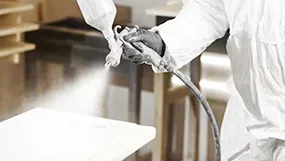
Industrial Coatings
Industrial coatings are widely used in fields such as machinery and equipment and steel structures; their formulations must balance corrosion resistance, adhesion, and application compatibility. In the field of industrial coatings, the wetting and dispersing agents provided by TAIGA Additives effectively disperse powders such as titanium dioxide, carbon black, and anti-rust pigments through multi-point anchoring and steric hindrance mechanisms, thereby reducing grinding viscosity and preventing flocculation and coarsening. Adhesion promoters significantly enhance the coating’s adhesion and salt spray resistance in humid environments by forming chemical bonds with metal substrates. The synergistic action of leveling agents and defoamers ensures that the paint film forms a smooth, defect-free surface after spraying or brushing, preventing the formation of craters and pinholes. Flash rust inhibitors suppress early rusting (flash rust) in water-based industrial coatings during the drying window, particularly on carbon steel welds, cut edges, and rough-ground surfaces.
More
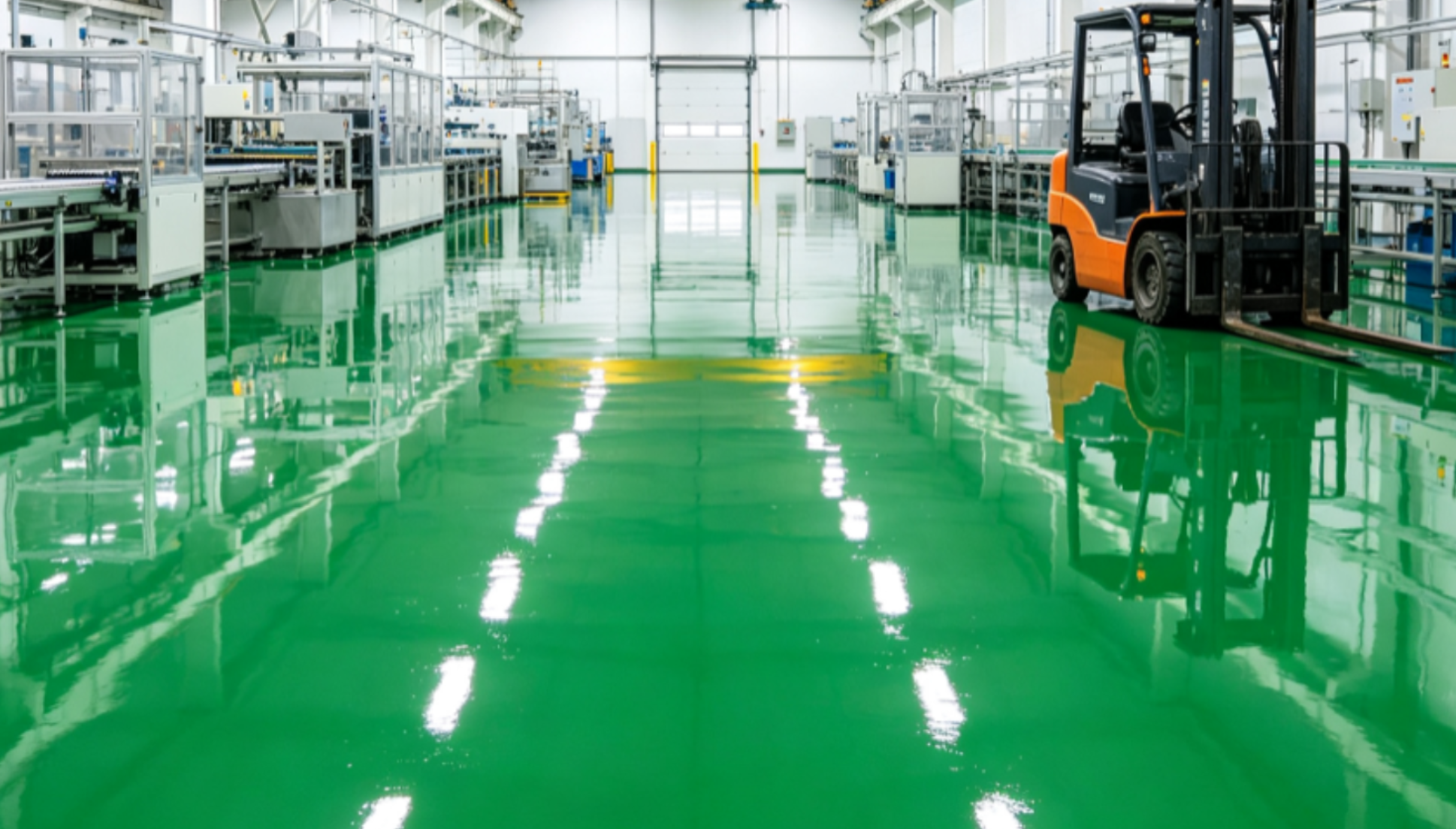
Floor Coatings
Floor coatings are widely used in factory workshops, warehouses, parking lots, and commercial venues; their formulations must balance wear resistance, compressive strength, chemical resistance, and flow properties during application. For floor coatings, the polymeric dispersants provided by TAIGA Additives effectively disperse solid particles such as pigments, quartz sand, and emery through multi-point anchoring and steric hindrance mechanisms. This reduces grinding viscosity and prevents flocculation and coarsening, ensuring color uniformity at seams and across different application stages. Rheological additives effectively prevent settling during storage of the floor coatings. Defoamers eliminate air bubbles entrapped during mixing, troweling, and self-leveling, ensuring the floor surface is free of pinholes and pitting. Substrate wetting agents reduce the surface tension of the coating, promoting rapid spreading and penetration onto low-porosity substrates or existing coatings.
More
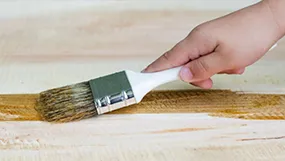
Wood and Furniture Coatings
Wood coatings must be applied in multiple layers to the surface of wood panels or highlight the wood’s natural grain, while providing a finish that is scratch-resistant, chemical-resistant, and pleasant to the touch. In wood coatings, TAIGA Additives’ wetting agents reduce the surface tension of the coating, promoting its penetration into the wood’s vessels and pores and preventing white spots (whitening) caused by trapped air. Leveling agents eliminate brush marks and orange peel by adjusting the surface tension gradient, achieving a highly transparent, mirror-like finish for wood topcoats. Scratch- and wear-resistant agents contain micro-crosslinked silicone microspheres that form a dense layer of silicone molecules on the paint film surface, enhancing scratch and wear resistance as well as tactile comfort.
More
Coil Coatings
When used on high-speed continuous coating lines, coil coatings must withstand rigorous processing such as bending and stamping without cracking, while also exhibiting excellent weather resistance. For coil coatings, TAIGA Additives’ acid catalysts release active acids during the curing process, precisely catalyzing the cross-linking reaction between amino resins and polyesters/polyurethanes. This ensures that the coating achieves the required hardness and solvent resistance within an extremely short curing time, while preventing pre-reaction in the can. Leveling agents reduce the surface tension of the coating, ensuring uniform film spread and a smooth, orange-peel-free finish during high-speed application.
More
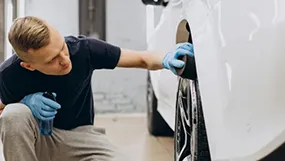
Automotive Touch-Up Paint
Automotive refinish paints must achieve perfect color matching for spot repairs in non-assembly-line conditions, requiring fast drying, high gloss, good intercoat adhesion, and weather resistance. For automotive refinish coatings, TAIGA Additives’ leveling agents can rapidly adjust the surface tension gradient to eliminate orange peel and pinholes, while our new-generation polyester leveling agents deliver greater fullness and improved leveling performance. Controlled-polymerization superdispersants ensure that high-pigment carbon black and organic pigments are fully deflocculated at low viscosities, achieving high color concentration and superior color accuracy.
More
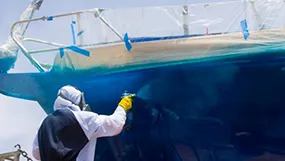
Ships and Anti-Corrosion Coatings
Marine anti-corrosion coatings for ships and offshore structures are constantly immersed in seawater and subjected to the harsh conditions of salt spray, ultraviolet radiation, biofouling, and alternating wet and dry cycles. In the field of heavy-duty anti-corrosion coatings, TAIGA Additives’ anti-settling agents (polyurea resin and polyamide wax) form a three-dimensional hydrogen-bond network to prevent high-density anti-corrosion pigments (such as zinc powder and zinc phosphate) from settling and caking during storage. In water-based epoxy zinc-rich primers, TAIGA’s anti-flash-rusting agents prevent flash rusting from occurring during the early stages of coating drying. Controlled-flocculation wetting and dispersing agents increase the powder loading and slow the rate of powder settling, thereby improving grinding efficiency and application fluidity.
More
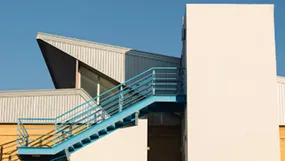
Architectural Coatings
Architectural coatings include interior and exterior latex paints, natural stone-effect paints, and multi-color coatings. Their core requirements are environmental friendliness (low VOC), stain resistance, scrub resistance, and ease of application. In the architectural coatings sector, TAIGA Additives’ water-based dispersants—based on polycarboxylate or polyphosphate structures—effectively stabilize pigments and fillers such as titanium dioxide and calcium carbonate, reducing slurry viscosity and enhancing pigment loading capacity. Rheological additives precisely regulate the paint’s low-shear viscosity (sag resistance) and high-shear viscosity (roll-coating splatter), achieving a balance between workability and leveling while extending the paint’s storage and service life. Silicone water-repellent agents can be applied directly to the substrate surface as a waterproofing agent or added directly to the surface of waterproof coatings to enhance the film’s water resistance.
More

Construction Chemicals
Construction chemicals, including waterproof mortar, concrete, grout, and self-leveling mortar, place high demands on material flowability, workability, and water resistance. TAIGA Additives’ wetting agents can significantly reduce the surface tension of slurries, concrete, and mortar, ensuring rapid spreading and penetration on substrates with low water absorption and preventing delamination. Defoamers can quickly eliminate air bubbles introduced during mixing and pumping, preventing pinholes and honeycombing on the surface of the hardened material. Dispersants can efficiently break up agglomerated cement particles, improving the uniformity and strength development of the slurry, while reducing water consumption and enhancing density and durability.
More
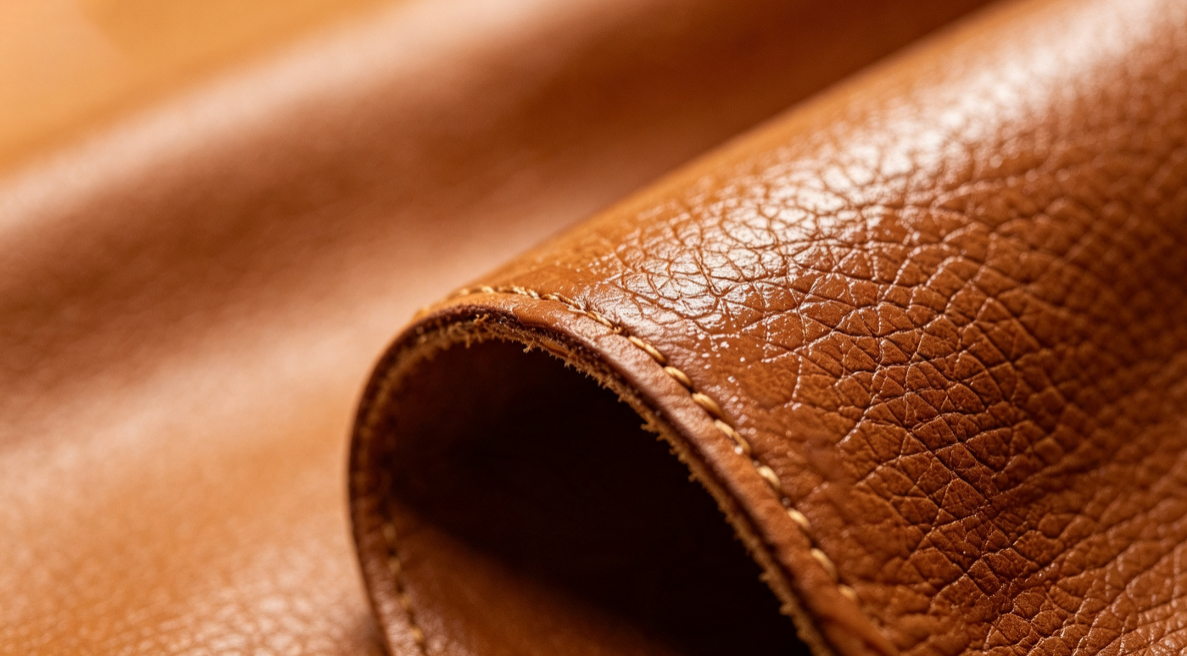
Textile and Leather Industry
Textile and leather additives impart functions such as water repellency, penetration, and dispersion stability to the substrate, thereby enhancing the added value of end products. Through specific functional groups, TAIGA Additives’ modified silicone additives form a soft, low-surface-energy layer on the surface of fibers or leather, giving fabrics an excellent smooth hand feel as well as water- and oil-repellent properties. Wetting and penetration agents ensure more uniform dye penetration and coloration.
More

Printing Ink
Printing inks must possess high color density, good flow properties, fast drying, and excellent adhesion, and be suitable for various printing processes such as offset, gravure, flexographic, and screen printing. TAIGA Additives’ superdispersants utilize multi-point anchoring groups (such as polyurethane or polyacrylate backbones) combined with solubilizing segments, providing exceptional deflocculation and stabilization capabilities for organic pigments and carbon black, thereby significantly enhancing color density, transparency, and gloss. Wetting agents eliminate ink-to-paper transfer issues during high-speed printing, ensuring print quality. Defoamers prevent the formation of micro-bubbles in ink during circulation pumping and high-speed printing, thereby avoiding white spots and missed printing. Adhesion promoters enhance ink adhesion on difficult-to-coat substrates such as PE, PP, and PET.
More
Inkjet
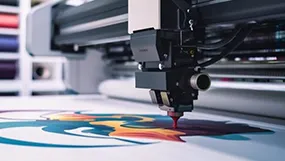
Inkjet inks must maintain precise droplet shape during high-speed ejection, prevent nozzle clogging, and produce images with high resolution and weather resistance. TAIGA Additives’ alkyne-based wetting agents can adjust the dynamic surface tension of the ink (25–35 mN/m), thereby controlling the break-off length and satellite droplet formation as droplets are ejected from the nozzle. The wetting and dispersing agents, which utilize block copolymers, provide steric stabilization for nanopigments (<200 nm), preventing particle agglomeration and nozzle clogging (particle diameter: 20–50 μm). Silicone-based wetting agents reduce static surface tension, improving print uniformity and fluidity.
More
Paper Coatings
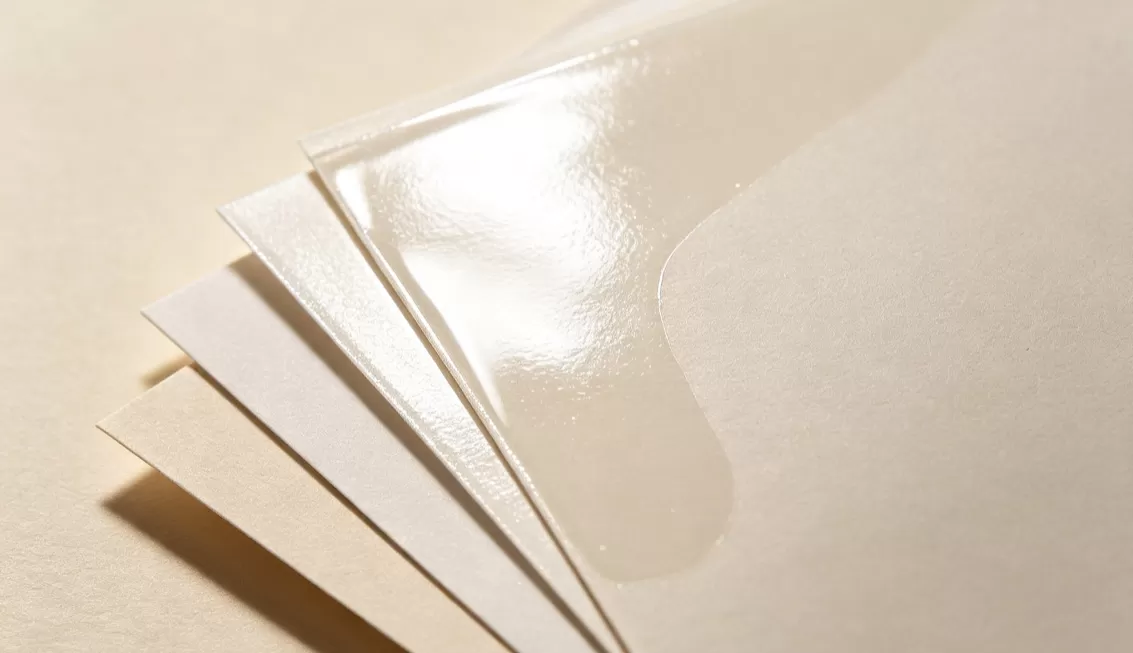
Paper coatings (paper varnishes) are used to enhance the brightness, smoothness, gloss, and printability of base paper, and are commonly applied to coated paper, white cardstock, and specialty papers. TAIGA Additives’ wetting agents facilitate rapid application of paper varnishes. Dispersants, based on polycarboxylic acid or polyphosphate structures, efficiently disperse kaolin, calcium carbonate, and titanium dioxide. They maintain low viscosity and good flowability even at high solids content levels of 65% or higher, ensuring a smooth coating process. Rheological additives regulate the coating’s water retention and shear-thinning properties, preventing doctor blade marks and the deposition of adhesive residues.
More
Adhesives and Sealants
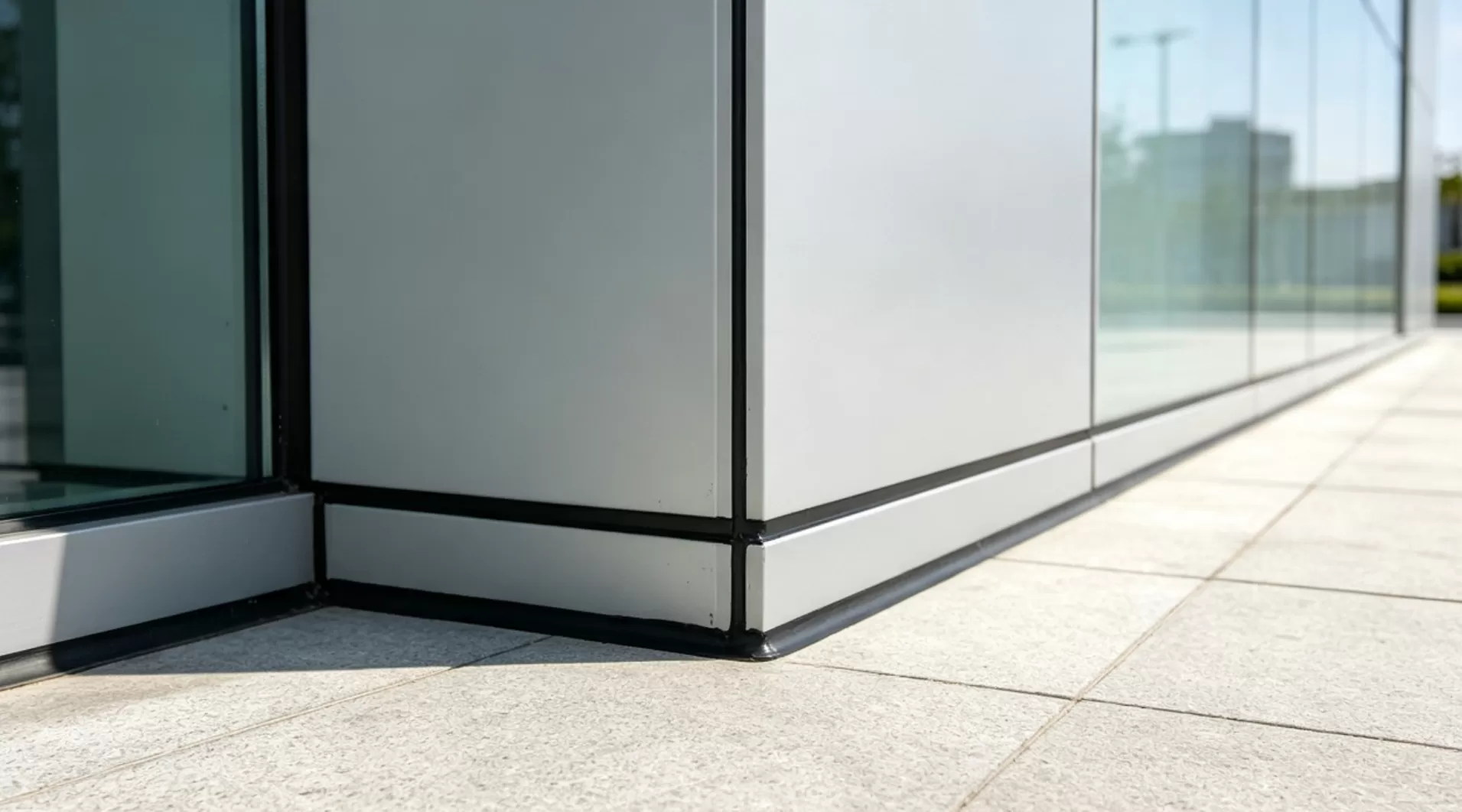
Adhesives and sealants are widely used in the construction, automotive, and electronics industries, where they must provide high bond strength, good thixotropy, and resistance to aging. TAIGA Additives’ silicone adhesion promoters and coupling agents form chemical bridges between inorganic fillers (such as calcium carbonate and silica fume) and organic resins (polyurethane, silicone, and epoxy), significantly enhancing interfacial bond strength and mechanical properties. Thixotropic agents (polyamide wax) impart high yield stress to adhesives through a hydrogen-bond network, preventing sagging during application on vertical surfaces. Defoamers eliminate air bubbles entrapped during mixing and application, ensuring a dense adhesive layer. Dispersants increase the calcium carbonate loading while ensuring smooth extrusion during application.
More
PVC Blends and Plasticized Pastes
PVC blends and plastisols are widely used in artificial leather, flooring, gloves, toys, and other products, which require good processability, thermal stability, and product appearance. TAIGA Additives’ processing aids promote the fragmentation and coalescence of PVC primary particles, improving melt uniformity and product transparency. Antistatic agents reduce static-induced dust attraction in the finished products.
More

New Energy Industry
The new energy industry (lithium-ion batteries, sodium-ion batteries, photovoltaics, etc.) places high demands on the uniformity, stability, and coating consistency of electrode slurries, which directly affect battery capacity and cycle life. TAIGA Additives’ superdispersants effectively break up agglomerates of carbon nanotubes (CNT), conductive carbon black (SP/Super P), and active materials (LFP/NCM/graphite), reducing slurry viscosity and increasing solid content, thereby improving coating efficiency and electrode sheet density. Wetting agents improve the slurry’s wetting and spreading properties on aluminum foil and copper foil current collectors, preventing pinholes and foil exposure during coating. Defoamers eliminate the effects of air in conductive slurries, ensuring the high efficiency of active materials during charge-discharge cycles.
More
Thermosetting Plastics
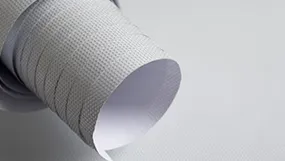
The processing and modification of thermoplastics (PP, PE, ABS, PC, PA, etc.) rely on additives to improve flowability, surface quality, and functionality. TAIGA Additives’ antistatic agents (ethoxylated amines/quaternary ammonium salts) reduce surface resistance through a moisture-absorbing conductive mechanism, eliminating the risk of static-induced dust attraction and electrical discharge. Thermosetting plastics (epoxy, phenolic, unsaturated polyester, etc.) form an irreversible cross-linked network after curing; additives are used to improve processability, demolding properties, and toughness. TAIGA Additives’ internal release agents migrate to the interface between the product and the mold during curing, forming a lubricating barrier layer that prevents mold sticking, improves demolding efficiency, and reduces the frequency of mold cleaning.
More
Lubrication and Demolding
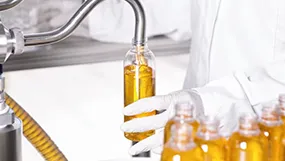
Lubricants and release agents are used in plastic, rubber, polyurethane, and metal molding processes to reduce friction, prevent sticking, and improve the surface quality of finished products. TAIGA Additives’ polymeric dispersants effectively break up agglomerates of flocculated solid particles through multi-point anchoring and steric hindrance mechanisms, ensuring uniform dispersion and long-term stability in solvent-based or aqueous systems. Wetting agents significantly reduce the surface tension between release agents and mold surfaces, ensuring rapid spreading and complete coverage within complex cavities and preventing localized release failures.
More
Cleaning Additives
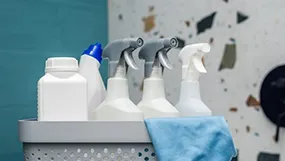
Textile cleaning involves the pretreatment and stain removal of fabrics such as down, cotton, and synthetic fibers. It requires the efficient removal of oils, stains, and residual processing aids without damaging the fibers, while maintaining the fabric’s whiteness, softness, and loft. TAIGA Additives’ nonionic surfactants (fatty alcohol polyoxyethylene ethers) reduce the interfacial tension between oil and water, rapidly penetrating the gaps between fibers to emulsify and disperse the natural oils and stubborn stains in down, thereby preventing yellowing after washing.
More
Reaction · Synthesis · Modification
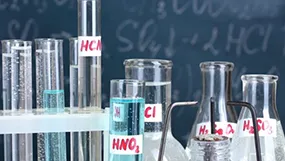
In the field of polymer synthesis and modification, reactive silicones and functionalized polyolefins are key methods for enhancing the interfacial properties and functionality of materials. TAIGA Additives’ reactive silicones react with resin matrices such as polyurethane, epoxy, and acrylate through pre-engineered active functional groups on their molecular chains—including primary amine, epoxy, and methacryloxy groups—to permanently anchor polysiloxane segments within the polymer, imparting excellent slip, hydrophobicity, and scratch resistance to coatings or elastomers. Functionalized polyolefins, on the other hand, introduce reactive functional groups into the nonpolar polyolefin main chain; after reaction, they significantly improve the material’s flexibility, low-temperature resistance, and salt spray resistance.
More
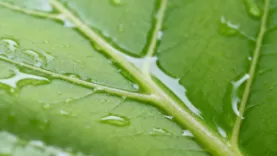
Pesticide Industry
Whether a pesticide formulation can uniformly cover the crop surface, spread rapidly, and adhere firmly after being diluted with water directly determines the efficiency of its efficacy and its residual effect. Especially on leaves with thick wax layers, dense trichomes, or surfaces that are difficult to wet, conventional pesticide solutions are highly prone to rolling off or forming beads, leading to the loss of active ingredients and localized phytotoxicity. TAIGA Adjuvants provide professional solutions for pesticide application. TAIGA’s trisiloxane wetting agent works by selectively reducing the surface tension of the spray solution, allowing water droplets to spread and wet the surface the moment they contact hydrophobic leaves. This overcomes the repulsive effect of the wax layer, significantly reduces the contact angle of the droplets, and ensures rapid penetration of the spray solution into stomata or crevices of the target plants. The product is readily biodegradable and environmentally friendly.
More
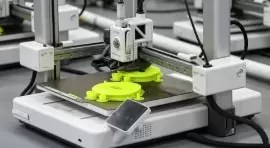
3D Printing
3D printing materials impose stringent requirements on raw material dispersibility, system rheology, and interlayer adhesion. TAIGA Dispersants are designed for highly filled 3D printing systems. Through multi-point anchoring and three-dimensional stabilization mechanisms, they effectively disperse pigments, ceramic powders, or metal powders in photopolymer resins (SLA/DLP), prevent particle sedimentation and agglomeration, and maintain the print slurry’s low viscosity and good flowability over the long term. TAIGA wetting agents rapidly reduce the surface tension of the slurry, significantly improving the wetting ability of inorganic pigments, ceramic powders, metal powders, and reinforcing fibers both before and after printing. They eliminate “dry spots” and air bubbles on particle surfaces, enabling molecular-level homogeneous mixing of all components. This directly reduces variations in curing shrinkage, warping, and fluctuations in mechanical properties caused by local compositional inhomogeneities during the printing process.
More
Contact Information
If you have any questions or need more information, please feel free to contact us at any time.